Promoting a Tire Retail Store on Facebook and Instagram

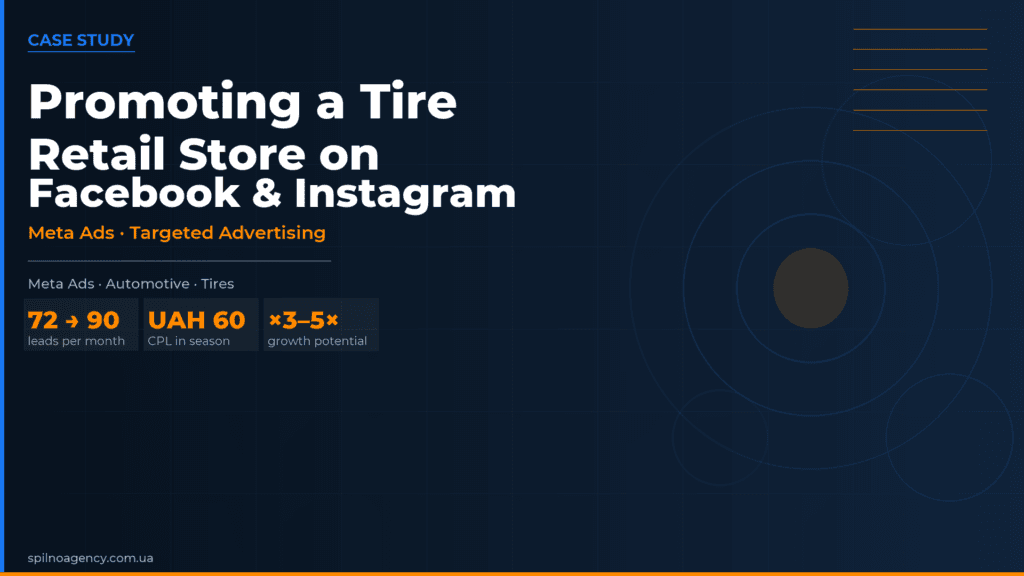
Targeted advertising case study: an auto service launched Meta Ads for tire sales during the season — 72 leads in month one at UAH 60 CPL, 90 leads in month two. The market has 3–5× more capacity if budgets are scaled.
About the Client and the Task
The client is an auto service we had already been working with successfully — there is a separate case study on generating repair-service leads via Google Ads and Meta Ads. In March, the client set a new objective: launch targeted advertising specifically for tire sales, right at the height of the spring changeover season.
The task was clear: generate the maximum number of leads — calls and messages — from people who needed to switch from winter to summer tyres. The timeline was tight, in-season competition was high, so we needed to move fast and precisely.
Meta Ads Strategy for the Tire Retail Store
We built the advertising strategy on three core principles: the right audience, the right format, and precise seasonal timing.
Audience Targeting
- Car owners by interest — targeting people interested in cars, vehicle maintenance, and specific car brands.
- Geo-targeting — 20–50 km radius from the store. Tyre retail is a local business; people won’t drive 100 km just to buy tyres.
- Retargeting — website visitors who browsed the catalogue but didn’t leave a request.
- Lookalike audiences — users similar to the client’s existing buyers.
Ad Formats
- Carousel — the most popular tyre models with prices and a ‘Buy Now’ CTA.
- Dynamic Product Ads (catalogue ads) — automatic ads showing the exact tyres a person viewed on the website.
- Video — short clips of tyre fitting or the benefits of a seasonal changeover.
- Stories and Reels — with CTAs like ‘Get Price’ or ‘Book Fitting’.
Seasonal Timing
Launching in March — at the peak of summer tyre demand — allowed us to ride natural audience intent and lower the cost per lead. The spring tyre-changing season is one of two key annual peaks (the second is October–November, when drivers switch to winter tyres).
Targeted Tire Advertising Results
Month 1: 72 Leads at UAH 60 CPL
The first month coincided with the height of the spring tyre-changing season. Natural demand amplified the ads — the audience was already searching for where to buy tyres, and our ads simply appeared at exactly the right moment.
- Leads generated: 72
- Cost per lead (CPL): ~UAH 60
- Client status: satisfied, ready to continue
Month 2: 90 Leads at UAH 100 CPL
In the second month, seasonal demand eased. People who needed to switch tyres in spring had already done so. However, thanks to accumulated audience data and optimised campaigns, the volume of leads actually increased — to 90.
- Leads generated: 90 (+25% vs month one)
- Cost per lead (CPL): ~UAH 100 (increase reflects drop in seasonal demand)
- Trend: stable market, client continued the partnership
The CPL increase from UAH 60 to UAH 100 is a normal and predictable situation for a seasonal business. It does not indicate a problem with the ads — it reflects market dynamics: fewer people are actively searching for tyres off-season. The correct response is not to pause campaigns, but to optimise audiences and prepare for the autumn peak.
Growth Potential
The tyre market is far larger than the client can handle with current budgets. Our data shows:
- Scaling ad spend 3–5× produces a proportional increase in leads without significant CPL deterioration.
- Lead quality depends on targeting precision, not budget size — with correct audiences, CPL remains stable.
- The autumn season (October–November) is the second key peak. Starting preparations in September allows you to achieve CPL around UAH 60–70 again.
Key Lessons from This Case Study
1. Seasonality Is the Primary Driver of CPL
Launching ads at the seasonal peak (March, October) delivers CPL that is 1.5–2× lower than off-season. Plan your ad budget so that spend is highest during peak seasons.
2. Geo-Targeting Is Critical
Tyre retail is a local service. People buy tyres from stores they can conveniently reach. A 20–30 km radius from the store ensures the highest-quality audience.
3. Retargeting Cuts CPL in Half
People who have already visited the website convert far better than a cold audience. Install Meta Pixel on the site and run dedicated retargeting campaigns as a separate ad set.
4. Dynamic Catalogue Ads Are a Must for Online Tyre Stores
If the store has an online catalogue, Dynamic Product Ads in Meta Ads are essential. They automatically show the specific tyres a user browsed and bring them back to complete the purchase.
Why Does CPL Rise Off-Season?
This is natural market dynamics every tyre retailer should understand:
- Lower demand — fewer people are actively searching for tyres off-season, so ads compete for a smaller pool of potential buyers.
- Lower conversion intent — people who don’t urgently need tyres are less likely to leave enquiries.
- Higher CPM — when more advertisers compete for the same residual audience, Facebook’s auction prices rise.
The solution is not to stop advertising, but to switch to a brand-awareness strategy in the off-season: keep the store visible so that when tyre-changing time arrives, people immediately think of you.
How to Launch Tyre Advertising on Facebook: Step-by-Step
- Install Meta Pixel on the website — without Pixel there is no retargeting and no Lookalike audiences.
- Create a product catalogue in Meta Commerce Manager — upload your tyre inventory with prices, photos and links.
- Define your seasonal plan — when you launch campaigns and with what budget.
- Segment your audiences — cold (interests + geo), warm (website visitors), hot (retargeting people who viewed specific products).
- Launch at least 3 ad formats — carousel, single image with price, Stories. Analyse which performs best.
- Track CPL weekly — if cost per lead rises, analyse ad frequency, audience quality and creative relevance.
- Scale what works — increase budget gradually (no more than 20–30% per week) to avoid disrupting the optimisation algorithm.
Conclusion
Advertising a tyre retail store on Facebook and Instagram delivers predictable results when seasonality and targeting are handled correctly. The key to success is precision — the right audience, the right timing, and the right ad format.
This case demonstrates: even without large budgets, you can generate 72–90 leads per month at UAH 60–100 per lead. If your business is in automotive retail or tyre sales and you want to launch targeted advertising, contact us or fill in the form below.
Frequently Asked Questions
How to advertise a tire shop on Facebook and Instagram?
Effective Meta Ads strategies for tire retail: seasonal campaigns launched 3–4 weeks before peak (October for winter tires, March for summer tires), Dynamic Product Ads for website visitor retargeting, interest-based targeting for car owners, and Lookalike audiences from existing customers. Geo-targeting within 20–50 km from the store significantly improves lead quality.
What is the cost per lead for tire shop Facebook advertising?
CPL for tire retail on Meta Ads depends heavily on seasonality. During tire-changing seasons (March–April, October–November), CPL drops to UAH 50–80. Off-season CPL rises to UAH 90–150. Precise audience targeting and relevant ad formats help maintain an acceptable CPL year-round.
What ad formats work best for selling tires on Facebook?
Most effective formats for tire retail: carousel ads showing popular tire models with prices, Dynamic Product Ads showing the specific tires a user viewed, video of tire installation or winter vs summer tire comparison, Stories and Reels with ‘Get Price’ or ‘Book Fitting’ CTA. Combining multiple formats outperforms any single ad type.
How to target car owners in Meta Ads?
Targeting options for car owners: interest targeting (cars, vehicle maintenance, specific car brands), behavioural segments (vehicle owners, recent car buyers), Lookalike audiences from your customer database, website visitor retargeting. Geo-targeting: 20–30 km radius from the store. Exclude audiences who have already converted.
When should I launch seasonal tire advertising?
Optimal launch timing: winter tires — mid-September, peak October–November; summer tires — early February, peak March–April. Launch campaigns 3–4 weeks before the season starts — competition is lower, CPM is cheaper. Gradually increase budget as peak demand approaches.

Read also
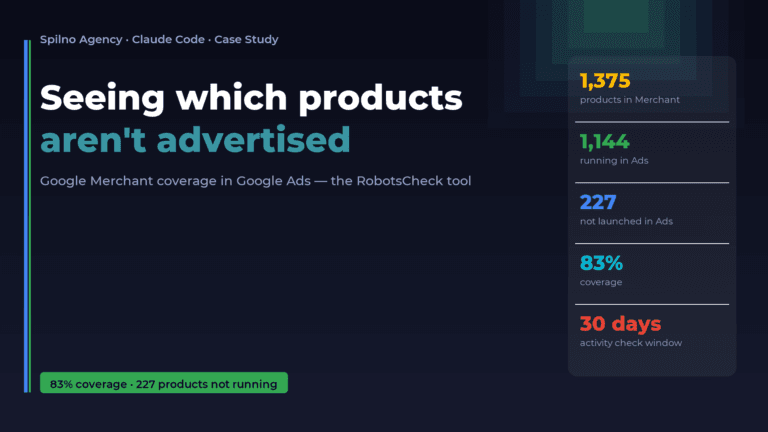
How Claude Helps Spilno Agency: Google Merchant Coverage in Google Ads
An online store lists 1,375 products in Google Merchant — but how many of them are actually running…
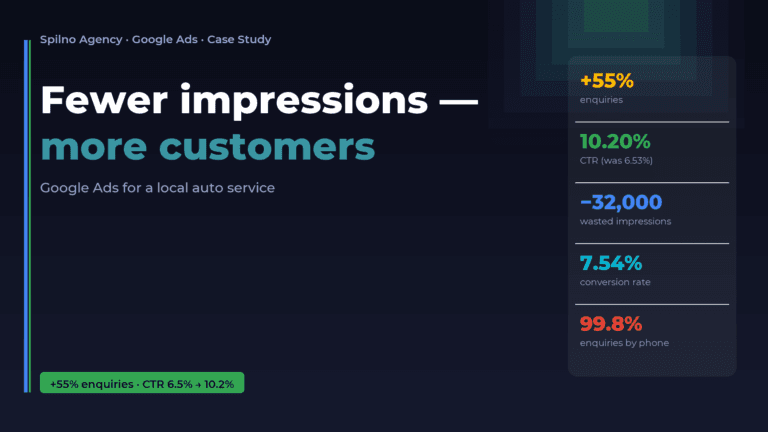
Google Ads for a Local Auto Service: Fewer Impressions, More Customers (Case Study)
A local auto service was spending its ad budget on tens of thousands of cheap impressions that barely…
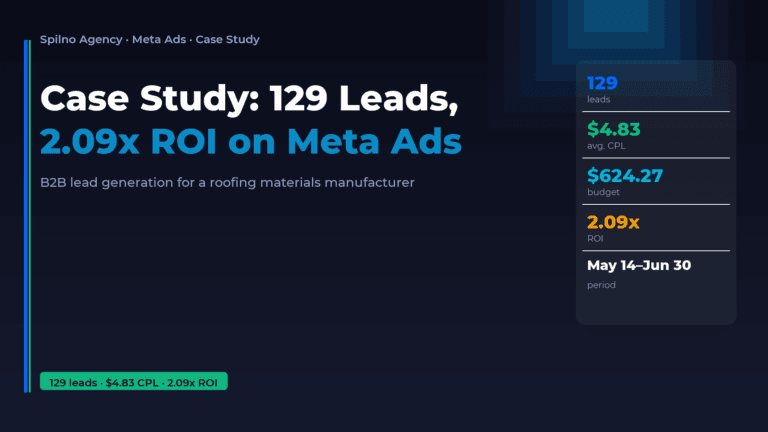
B2B Manufacturer Case Study: 129 Leads and 2.09x ROI with Meta Ads
A European roofing and facade materials manufacturer approached Spilno Agency with a clear goal — build a B2B…