Low-, Mid-, and High-Frequency Keywords: What They Are and How to Use Them

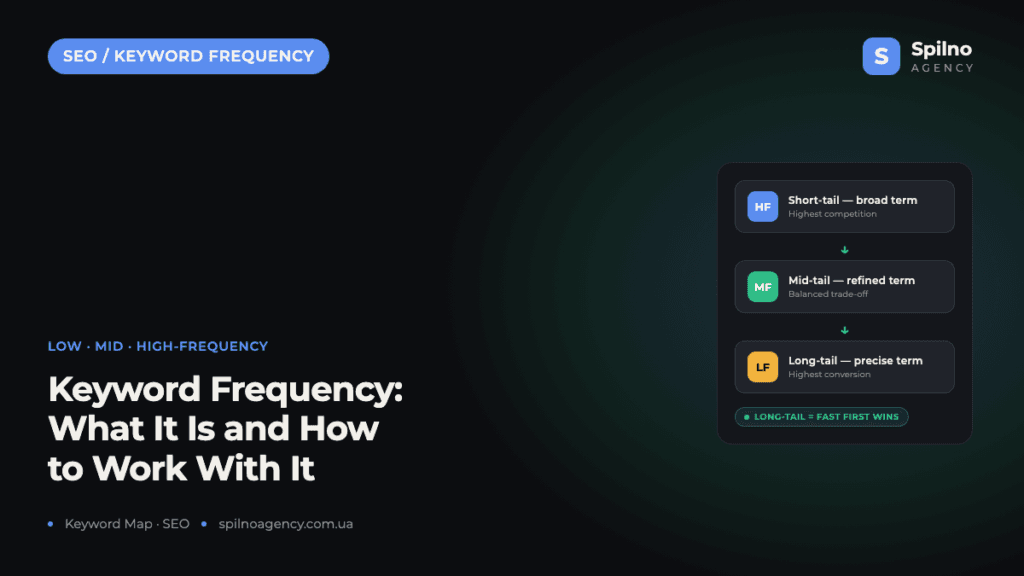
Low-frequency, mid-frequency, and high-frequency queries (also known as long-tail, mid-tail, and short-tail keywords) are a way of grouping search queries by monthly search volume. This frequency determines how much traffic a keyword can bring, how hard it is to rank for, and which page should target it.
What is keyword frequency
In plain terms: search volume is simply how often people type a particular phrase into search over a month. Some phrases are searched tens of thousands of times, others twenty.
And that does not make the popular ones better: the most frequent phrases have the strongest competitors behind them, while rarer ones bring people who know exactly what they want.
Why this matters to your business: this choice decides whether you see first results in three months or in two years.
Keyword frequency is the number of times users typed a specific query into a search engine over a given period (usually a month). This metric is what splits keywords into three groups: high-frequency (short-tail), mid-frequency (mid-tail), and low-frequency (long-tail).
There’s no universal cut-off between the groups — it depends on the niche. In a medical niche, 500 monthly searches might already count as high-frequency, while in a highly competitive niche (real estate, banking) the same volume would be considered low-frequency. The ranges below are a starting point to adjust for your specific project.
High-frequency (short-tail) keywords
High-volume phrases are short and general — “laptop” or “double glazing”. Very many people search them, but it is unclear why: one wants to buy, another to read reviews, a third simply to check prices.
Why this matters to your business: competing for such phrases is close to hopeless for a new site, and even if you succeed, most visitors will not become customers because they arrived with a different purpose.
High-frequency keywords are short, broad phrases with a large search volume — usually several thousand searches per month or more. Examples: “buy a phone”, “sneakers”, “home renovation”.
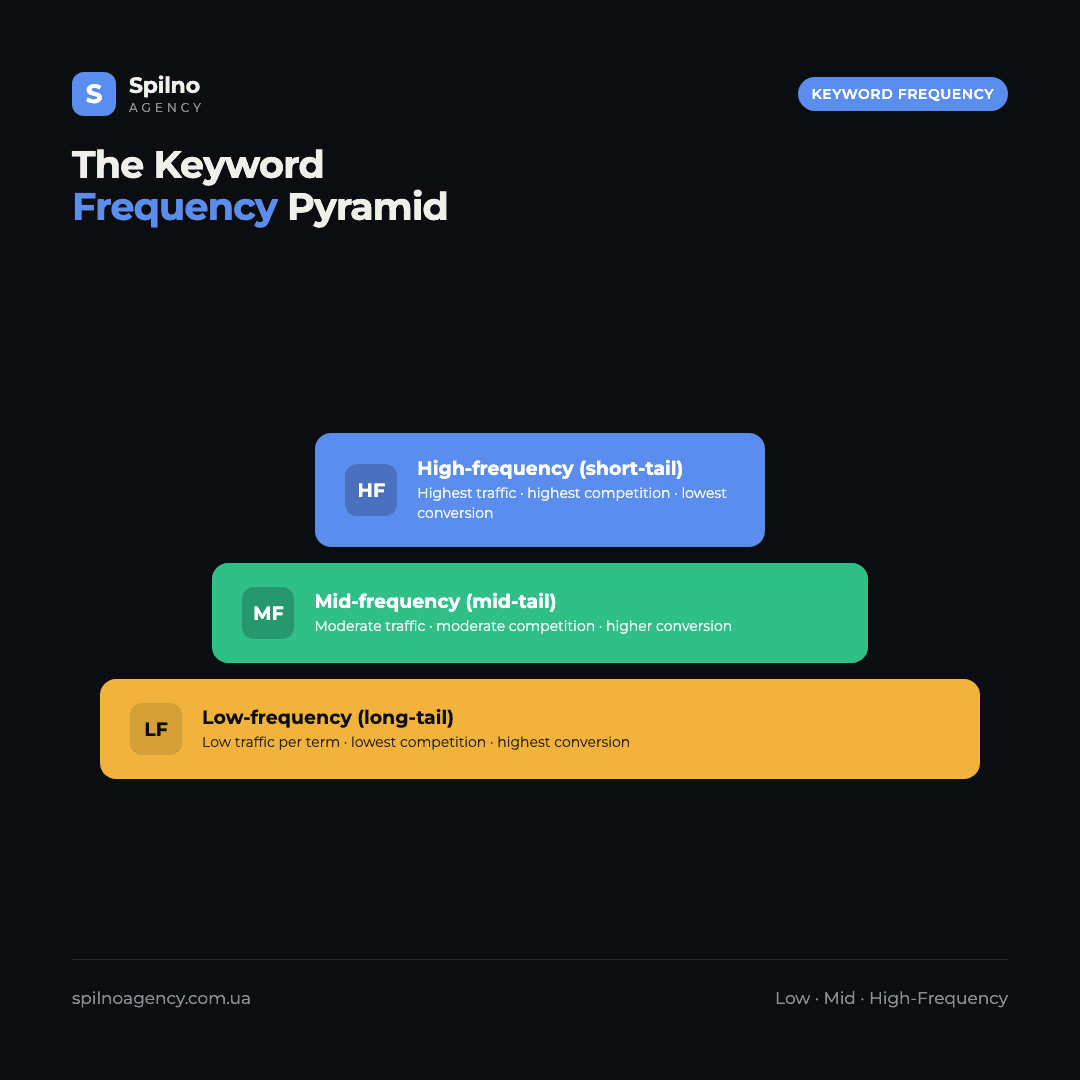
- Traffic: the highest potential volume of the three types.
- Competition: the highest — the biggest players in the market fight for these terms.
- Conversion rate: the lowest — the query is too broad to reveal the user’s specific intent.
- Time to rank: from six months to several years in competitive niches.
Mid-frequency (mid-tail) keywords
Mid-volume phrases already carry a qualifier: not just “laptop” but “laptop for studying” or “Lenovo 15-inch laptop”. The person is not ready to buy this second, but already knows what they are looking for.
Why this matters to your business: this is the most balanced option — competition is manageable and visitors arrive with genuine interest rather than idle curiosity.
Mid-frequency keywords narrow down user intent by adding details — a brand, category, or product type. Example: “buy iPhone 15”, “women’s Nike sneakers”. Search volume is usually a few hundred to a few thousand per month.
- Traffic: moderate but stable.
- Competition: moderate — fewer competitors than high-frequency terms.
- Conversion rate: higher than high-frequency, since user intent is partially clear.
- Time to rank: 2–6 months.
Low-frequency (long-tail) keywords
Low-frequency keywords — commonly called long-tail keywords — are highly detailed phrases: a specific model, colour, size, feature, or even a full question. Example: “buy iPhone 15 Pro Max 256GB black with warranty in Berlin”. Search volume is usually under 100 per month.
- Traffic: low per individual keyword, but hundreds of long-tail keywords combined can outperform a single high-frequency term.
- Competition: the lowest — even a new site can rank in the top results.
- Conversion rate: the highest — the user knows exactly what they want.
- Time to rank: from a few weeks to 1–2 months.
Infographic: the keyword frequency pyramid
How to check keyword frequency
The main tools for checking search volume:
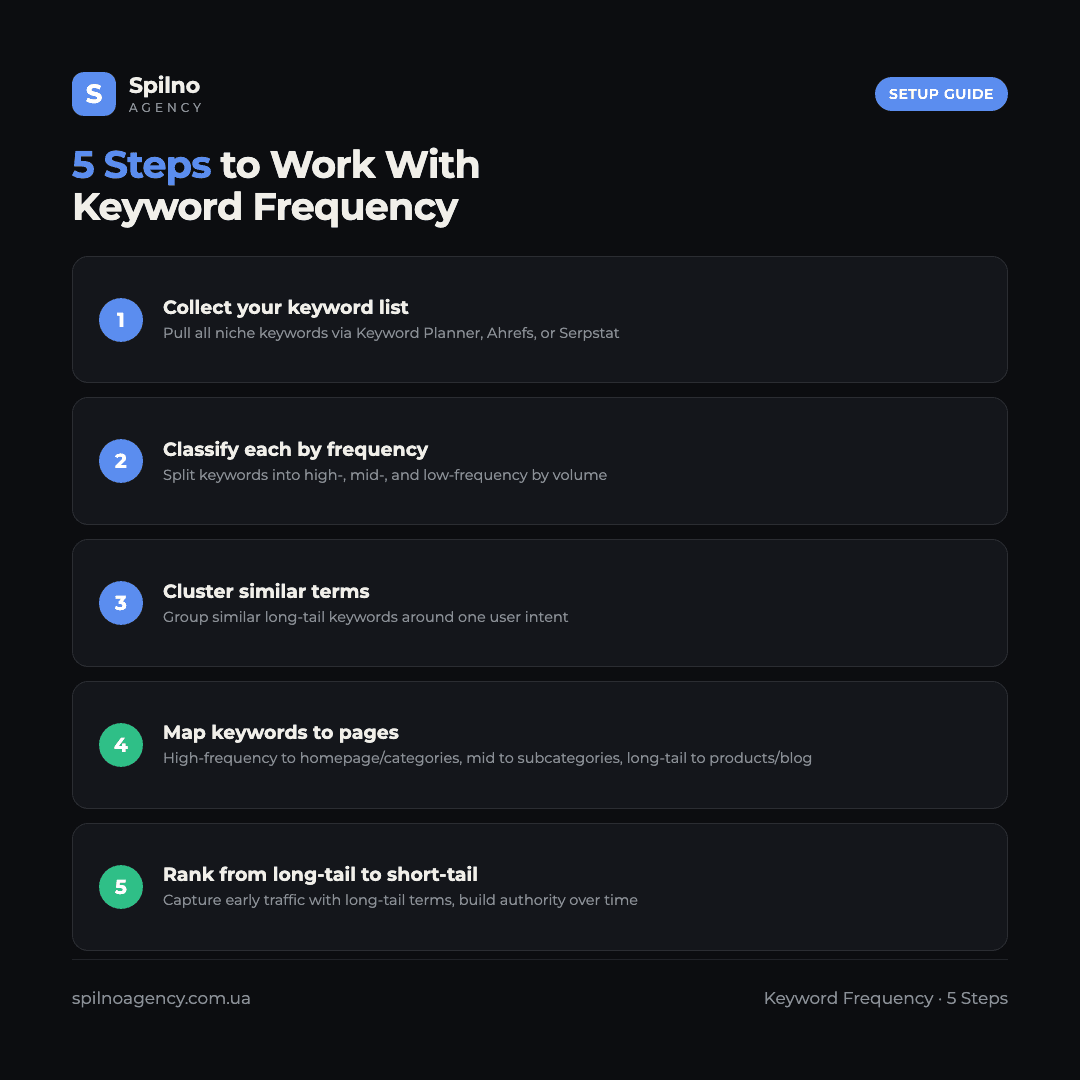
- Google Keyword Planner — Google Ads’ free official tool, shows a search volume range.
- Ahrefs / Serpstat — paid SEO tools with more precise volume, difficulty (KD), and seasonality data.
- Google Trends — shows how a keyword’s popularity changes over time, useful for seasonal niches.
- Google Search Console — real data on the queries your site already ranks for.
How to build a keyword map around frequency
Correctly distributing keywords by frequency defines your site structure:
- High-frequency keywords — the homepage and main category pages.
- Mid-frequency keywords — subcategories, brand pages, or service-type pages.
- Low-frequency keywords — product pages, blog posts, pages answering specific questions.
Every keyword should map to a single, most relevant page. Grouping several long-tail keywords onto one product or service page helps avoid keyword cannibalisation, where multiple pages on the same site compete for the same query.
Why you should start ranking with long-tail keywords
For new sites or pages with low search-engine trust, it makes sense to start ranking with long-tail keywords: low competition lets you reach the top faster, and the higher conversion rate brings the first sales and positive engagement signals. That, in turn, gradually builds page authority and makes it easier to compete for mid- and high-frequency terms later.
How keyword frequency affects paid search
In Google Ads, keyword frequency directly affects cost per click (CPC) and bidding strategy. High-frequency keywords have the highest CPC due to heavy competition among advertisers. Long-tail keywords are cheaper per click and often deliver a higher ROAS since the traffic is more targeted — which is why an effective PPC strategy almost always combines short-tail terms for reach with long-tail terms for precise conversions.
Best practices for working with keyword frequency in 2026
- Account for the growing share of long-tail queries — voice search and Google’s AI Overviews phrase queries in natural language, which increases the share of longer, low-frequency phrasing.
- Cluster long-tail keywords — group several similar low-frequency keywords onto one page instead of creating dozens of near-identical pages.
- Analyse search intent, not just volume — a low-volume keyword with clear commercial intent is often more valuable than a high-frequency informational one.
- Refresh your keyword map regularly — search volume shifts with seasons, trends, and new product launches.
Infographic: 5 steps to work with keyword frequency
Conclusion
Splitting keywords into low-, mid-, and high-frequency terms is the foundation of any SEO strategy. Understanding how to distribute them across your site’s pages lets you capture early traffic through long-tail keywords, gradually build authority, and eventually compete for the most valuable high-frequency terms in your niche.
If you need help building a keyword map or an SEO strategy, the Spilno Agency team is ready to help.
Frequently asked questions about keyword frequency
What are low-frequency, mid-frequency, and high-frequency keywords?
A way of grouping search queries by monthly volume: high-frequency (short-tail) is broad and high-volume, mid-frequency (mid-tail) is more specific with moderate volume, low-frequency (long-tail) is highly detailed with low volume each.
What’s the volume threshold for low-, mid-, and high-frequency keywords?
No universal threshold — it depends on the niche. Roughly: long-tail under 100 monthly searches, mid-tail a few hundred to a few thousand, short-tail several thousand or more.
Which keywords should a new website start ranking for?
Long-tail keywords — lowest competition, faster ranking, quicker first traffic and conversions.
What tools can check keyword frequency?
Google Keyword Planner, Ahrefs, Serpstat, Google Trends, and Google Search Console.
Does keyword frequency affect the cost of Google Ads?
Yes — high-frequency keywords have a higher CPC due to competition, while long-tail keywords are cheaper per click and often deliver a higher ROAS.
How does keyword frequency affect site structure?
High-frequency to the homepage and categories, mid-frequency to subcategories, long-tail to product pages and blog posts — each mapped to a single most relevant page.

Read also

Is an SEO specialist responsible for leads and sales? Our position
A LinkedIn discussion: should an SEO specialist be responsible for leads and sales from the SEO channel. Spilno…
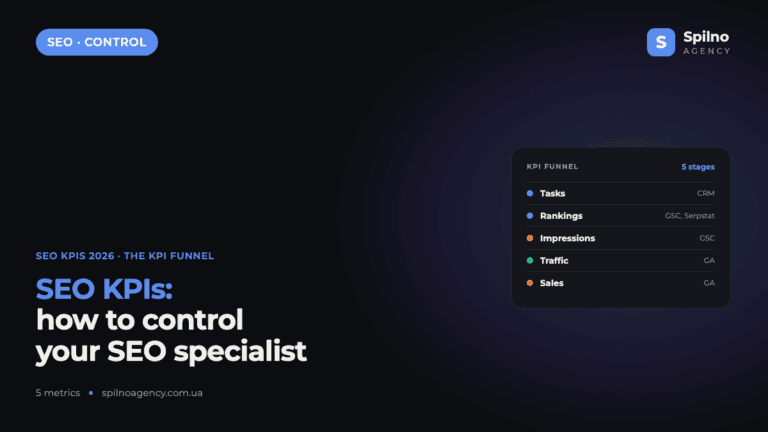
How to Control an SEO Specialist: The 5-Stage SEO KPI Funnel
SEO KPIs form a chain of five metrics that show, step by step, whether your SEO is actually…
Best CMS for an Online Store: Cloud vs Self-Hosted Platforms in 2026
Compare Shopify, WooCommerce, PrestaShop, OpenCart and Magento for your online store. Pros, cons, and a step-by-step CMS selection…