Serpstat vs Semrush vs Ahrefs 2026: Side-by-Side Comparison

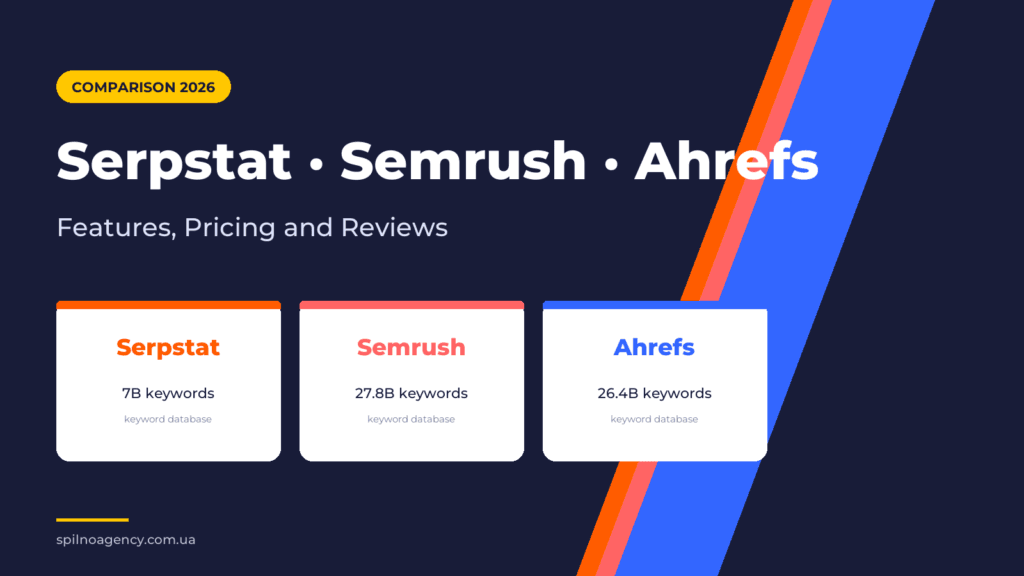
Serpstat, Semrush and Ahrefs are the three SEO platforms that most frequently end up on digital teams’ shortlists in 2026. In this review we line them up across the four parameters that matter when choosing a tool: features, database size, pricing and real user reviews. We do not draw the conclusion — picking the platform that fits your tasks and budget is up to you.
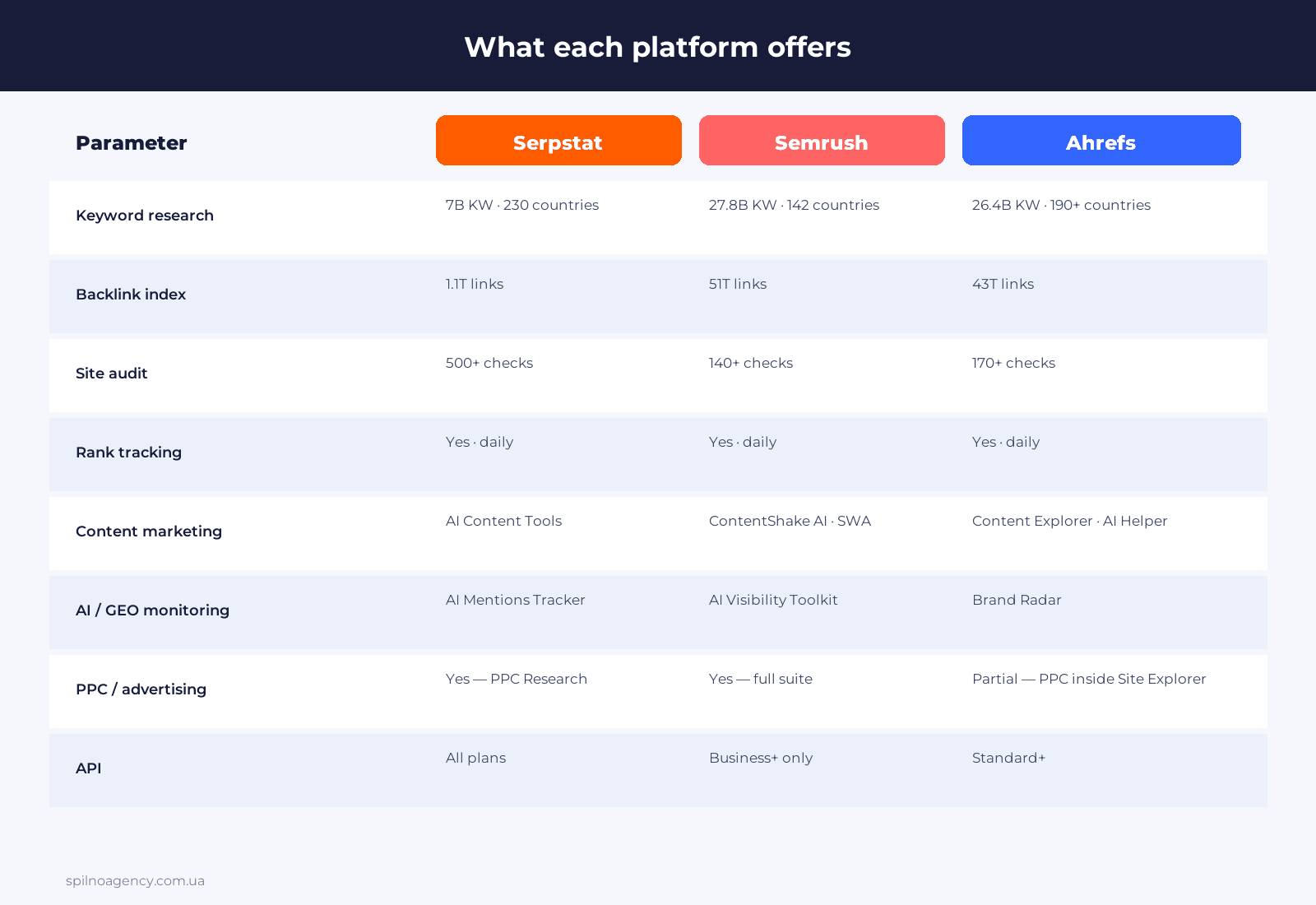
Quick take: who they are
All three are all-in-one SEO platforms that bring keyword research, competitive analysis, site audit, rank tracking and backlink monitoring into a single dashboard. They grew out of different market needs, though, and that legacy still shows in their product focus.
| Platform | Founded | HQ | Core focus | Users |
|---|---|---|---|---|
| Serpstat | 2013 | Odesa, Ukraine (part of Netpeak Group) | Affordable all-in-one for SMB | ~250,000 in 178 countries |
| Semrush | 2008 | Boston (NYSE: SEMR) | Digital-marketing ecosystem (SEO + PPC + content) | 1.8M+ in 142 countries |
| Ahrefs | 2011 | Singapore | Backlinks and organic traffic analysis | 1M+ marketers and SEOs |
Keyword research
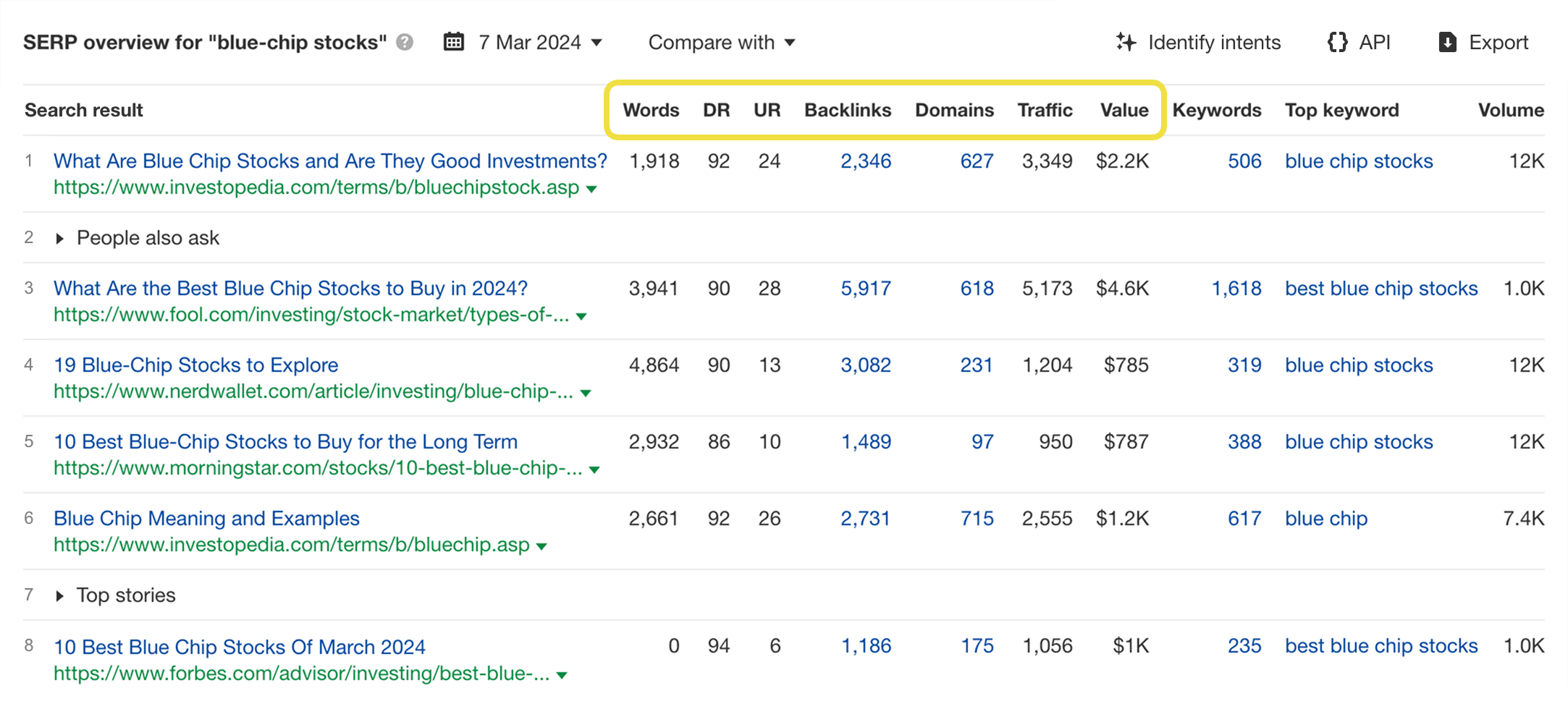
Keyword research is the heart of any SEO platform. Database size, search volume accuracy and the workflow inside the tool are the three things to compare.
Serpstat — keywords
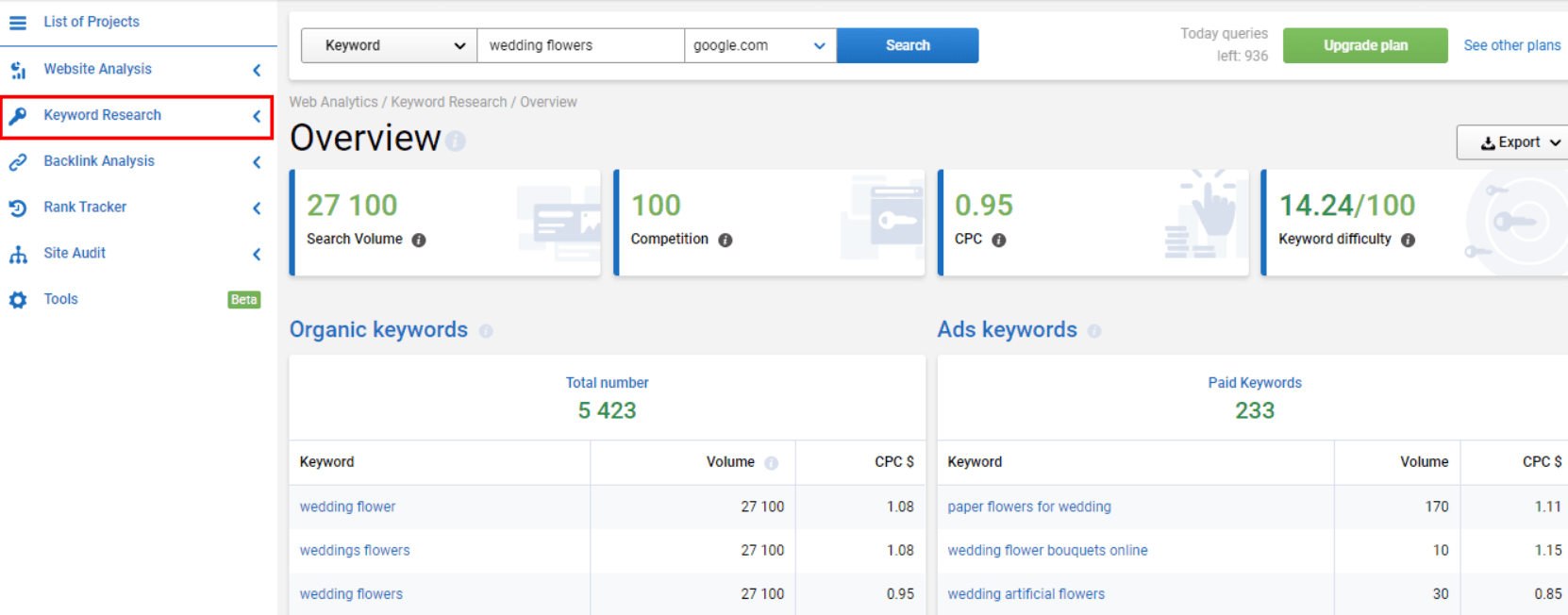
Serpstat’s database holds about 7 billion keywords across 230 search-engine databases. The Keyword Research module covers depth, related, suggestions, questions and trending terms. A distinctive feature is the built-in keyword clustering based on top-10 SERP overlap — clusters are computed automatically by a chosen URL-match threshold and are ready to use in a content plan.
Semrush — keywords
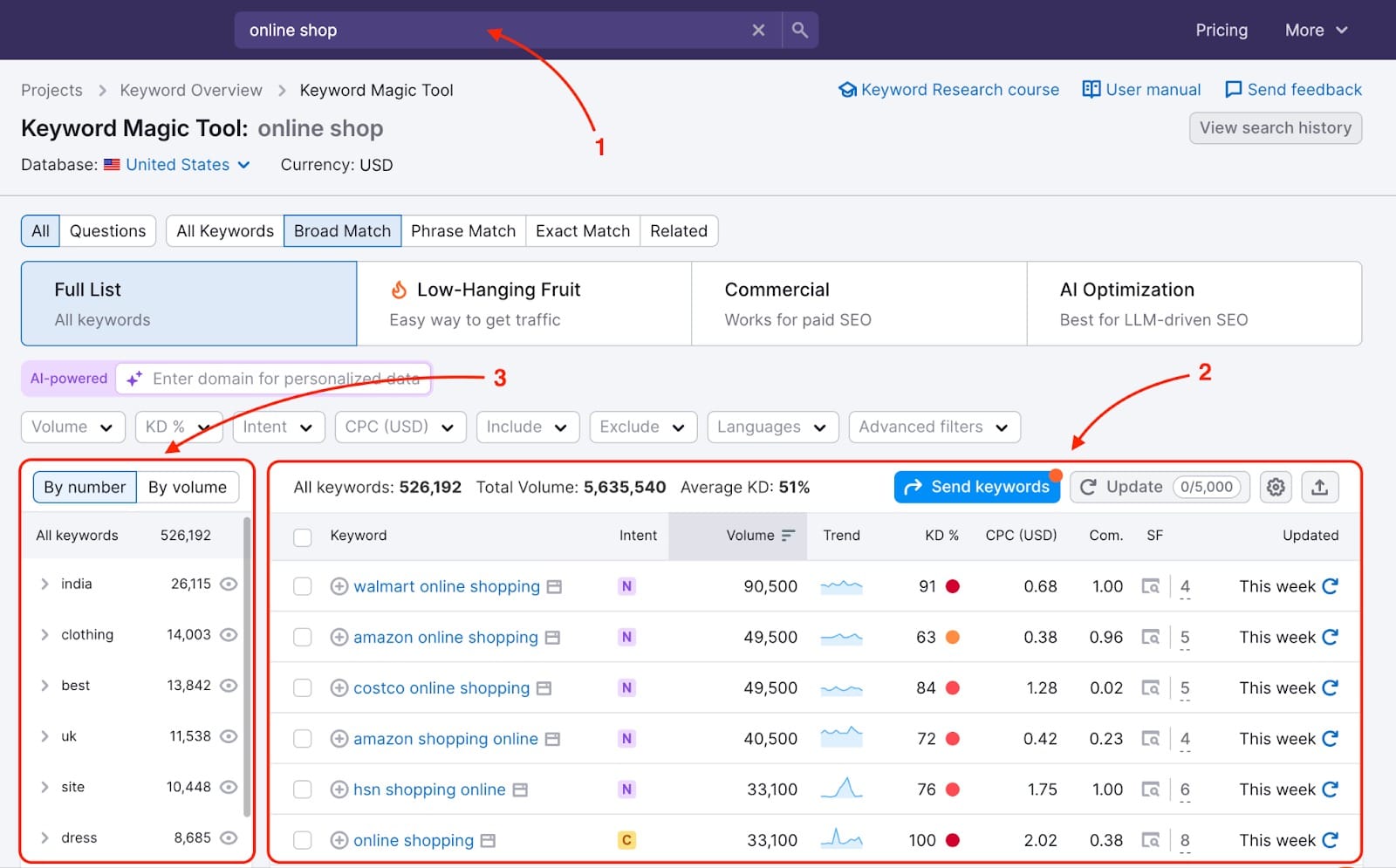
Semrush Keyword Magic Tool is the largest database in the category — 27.8 billion keywords across 142 countries. Beyond volume, CPC and difficulty, it shows intent (informational / navigational / commercial / transactional), SERP features and 24-month trends. It is complemented by Keyword Overview, Keyword Gap, Keyword Strategy Builder and Bulk Analysis.
Ahrefs — keywords
Ahrefs Keywords Explorer holds 26.4 billion keywords across 190+ countries with data from Google, YouTube, Amazon and Bing. The 2026 release added a Global Mode — research keywords across all countries at once without per-country queries. Unique metrics: Traffic Potential (the actual traffic of the winning page) and Clicks Per Search (how clickable a given SERP is).
Domain and backlink analysis
Backlink analysis is the second pillar of all three platforms. The index-size gap is the most visible difference here.
Serpstat — backlinks
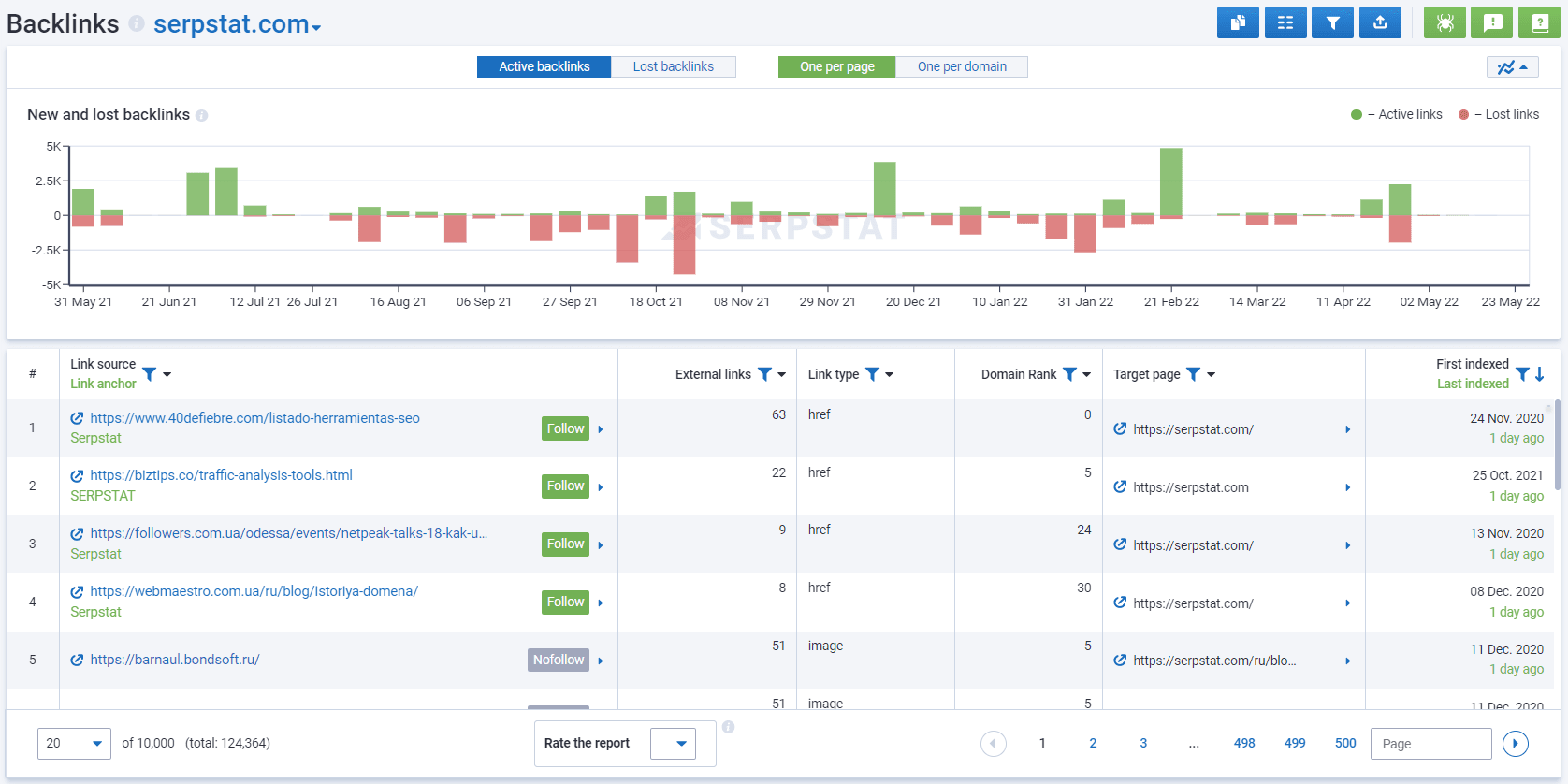
Serpstat indexes around 1.1 trillion links. The Backlink Analysis module shows referring domains, anchors, link types (dofollow / nofollow / UGC / sponsored), TLD breakdown, new and lost links and Toxic Backlinks with a risk score and a downloadable disavow template.
Semrush — backlinks
Semrush has the largest backlink database in the industry — 51 trillion links and 390 million referring domains. The suite includes Backlink Analytics, Backlink Audit (with GSC integration and automated disavow), Backlink Gap (comparison against up to five competitors) and the Link Building Tool for outreach campaigns.

Ahrefs — backlinks
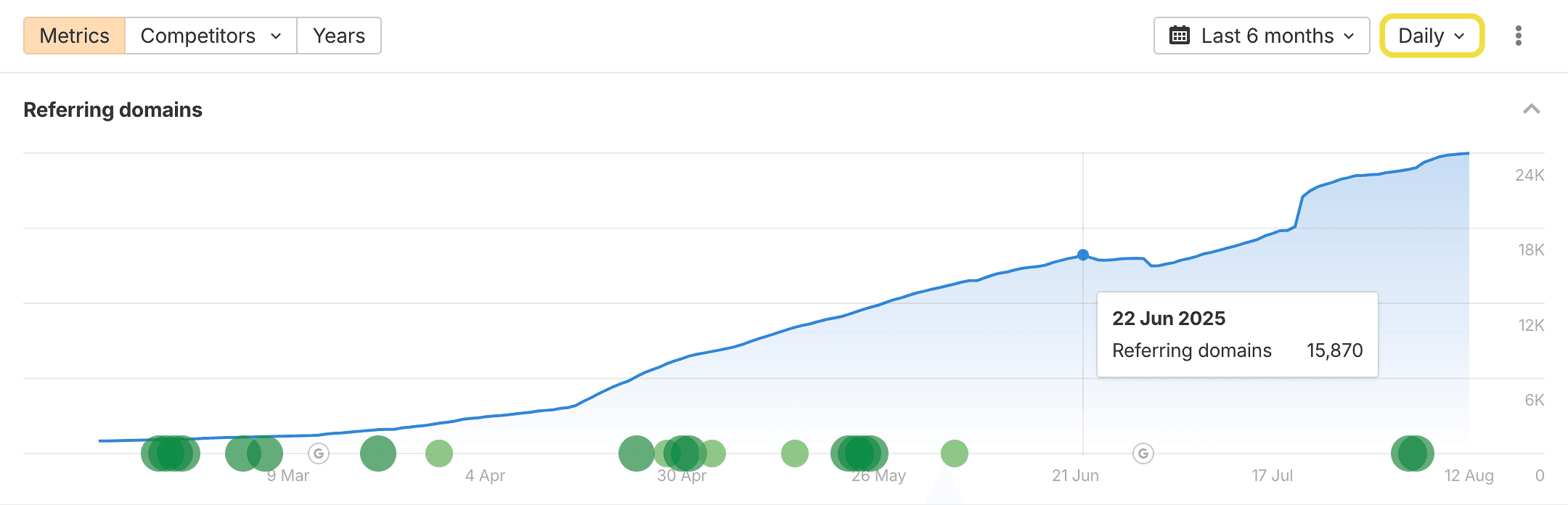
Ahrefs has historically been the №1 backlink tool. Its own search infrastructure (the AhrefsBot makes 5M requests/min) yields 43 trillion indexed links. Site Explorer surfaces backlinks with filters by anchor, type, DR, donor page traffic, language and industry. Broken Backlinks and Link Intersect are separate workflows for opportunity discovery.
Technical site audit
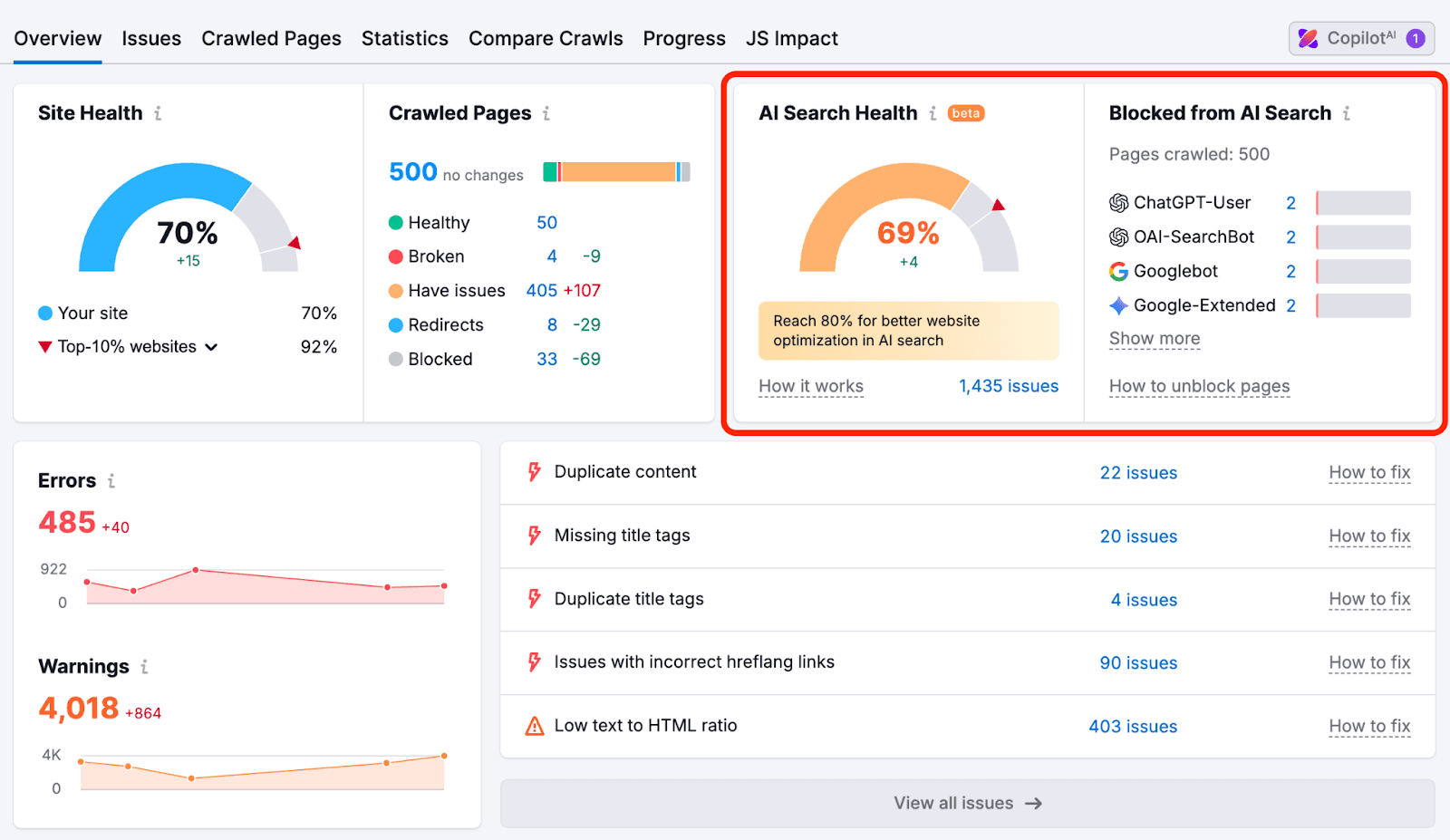
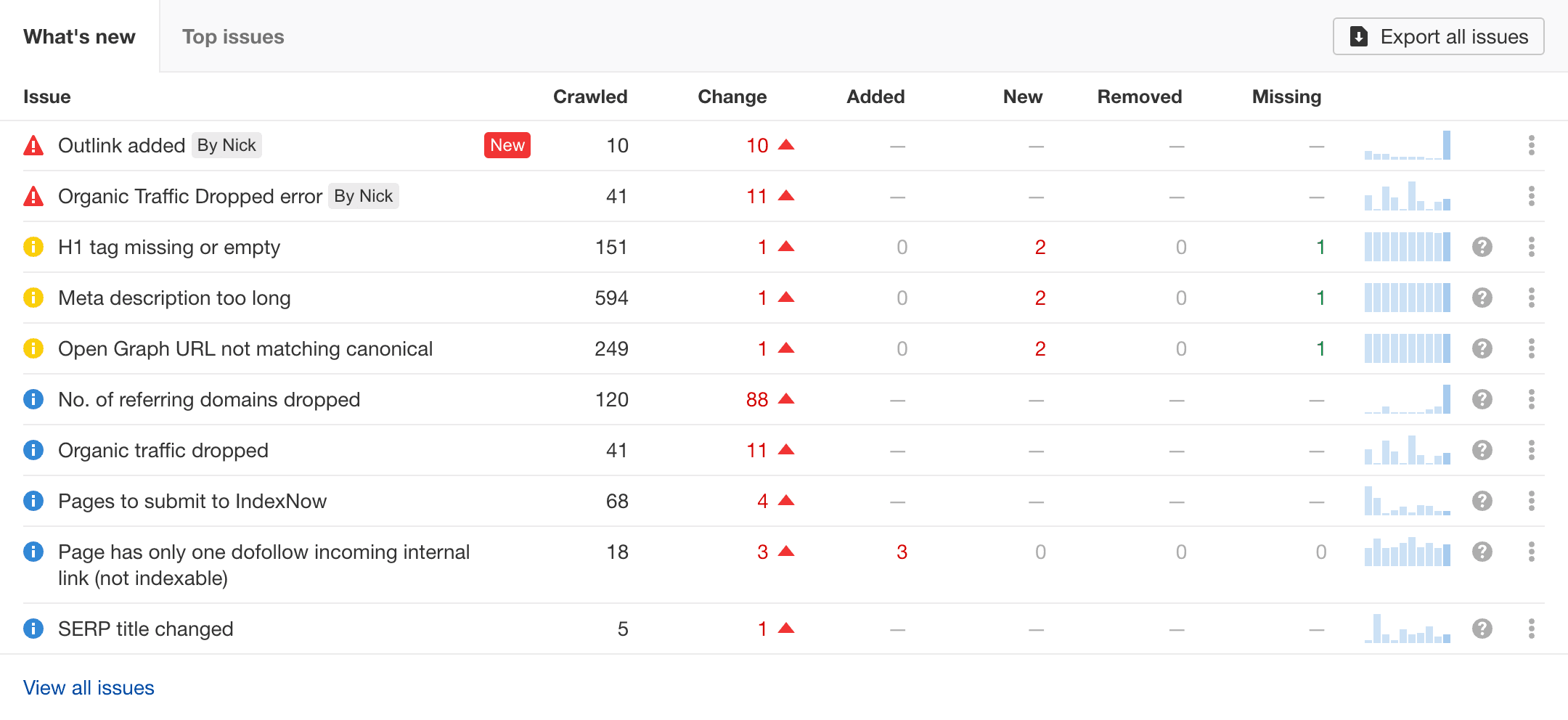
Site Audit is for finding technical issues — noindex, canonical, duplicates, Core Web Vitals and so on. All three platforms have their own audit module, but depth and limits differ.
| Parameter | Serpstat | Semrush | Ahrefs |
|---|---|---|---|
| Number of checks | 500+ | 140+ | 170+ |
| Crawl limit (top tier) | 1,000,000 pages/month | 1,000,000 pages/month (Business) | Up to 30,000,000 credits/month |
| JavaScript rendering | Yes | Yes | Yes |
| Lighthouse / Core Web Vitals | Yes | Yes | Yes (Lighthouse metrics) |
| Log file analysis | — | Log File Analyzer | — |
| GSC integration | Yes | Yes | Yes |
AI and GEO monitoring
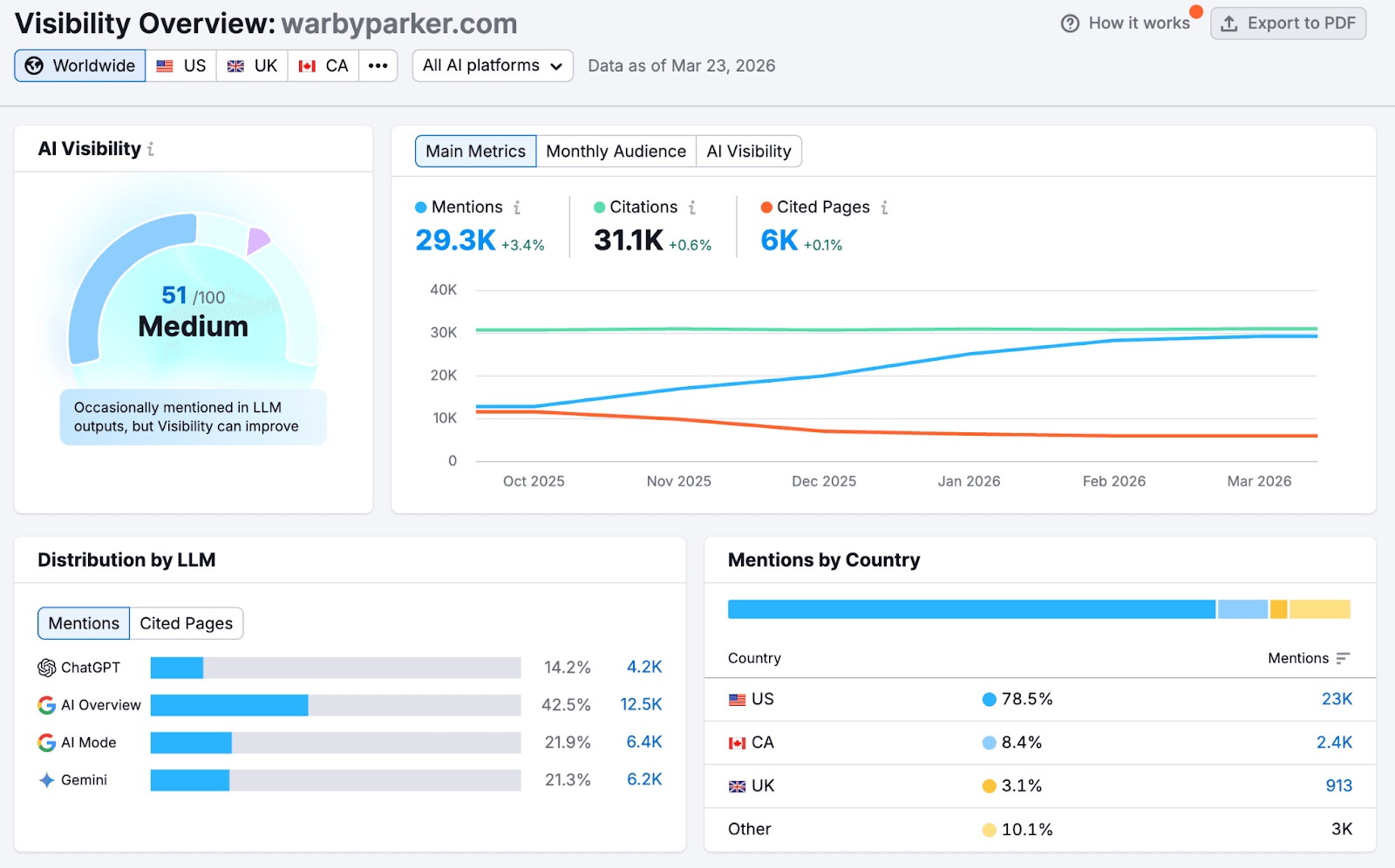
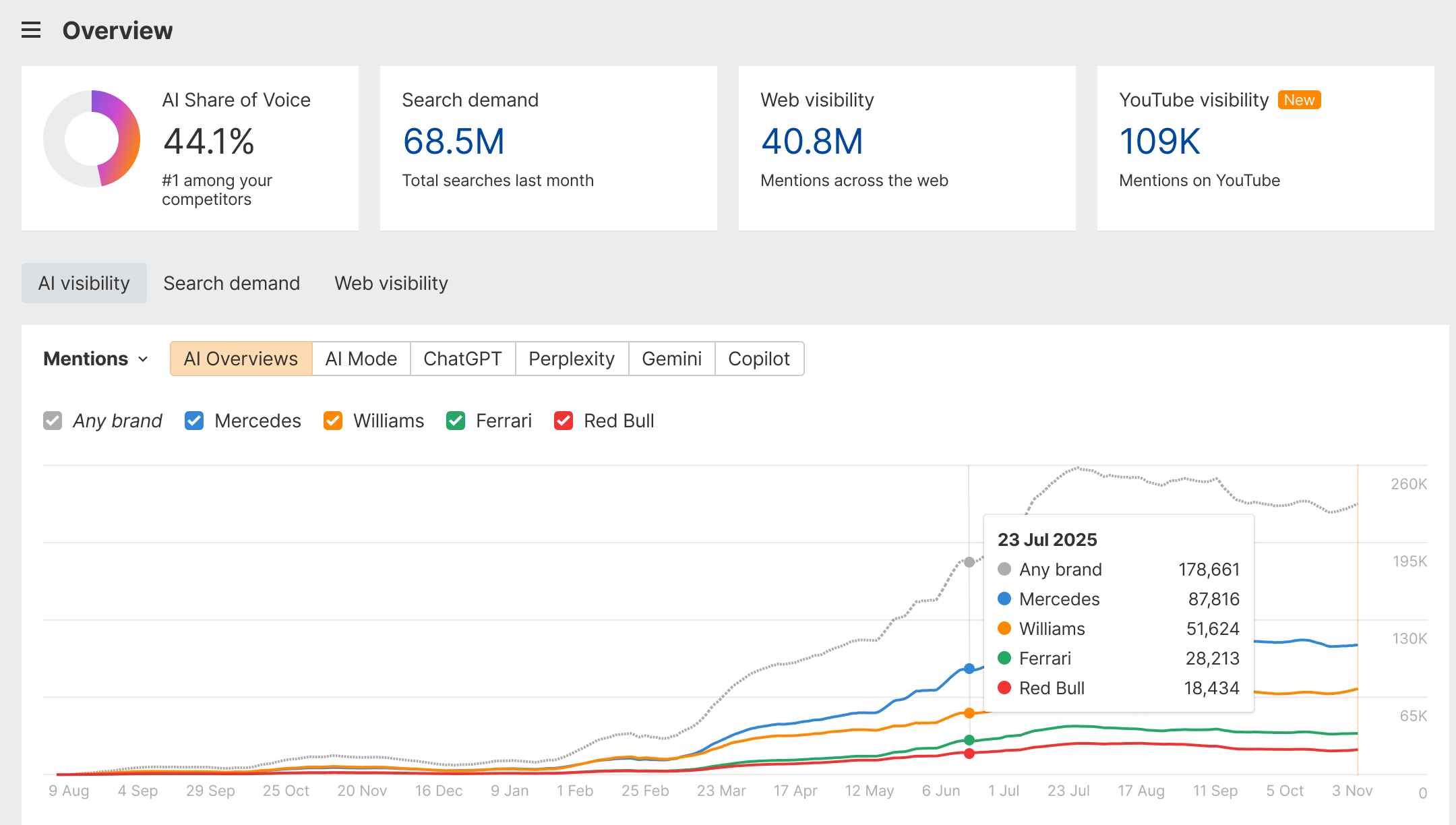
Through 2025–2026 all three platforms have added monitoring of brand presence inside ChatGPT, Google AI Overviews, Perplexity, Gemini and Claude. The implementation differs:
- Serpstat — AI Mentions Tracker and AI Visibility Score: checks brand mentions in LLM answers across a list of prompts.
- Semrush — AI Visibility Toolkit ($99/mo) + Semrush One (from $199/mo): share of voice, a GEO audit across 25+ factors, and content recommendations.
- Ahrefs — Brand Radar: tracks brand presence inside Google AI Overviews and AI answers, with analysis of cited domains and pages.
Pricing in 2026
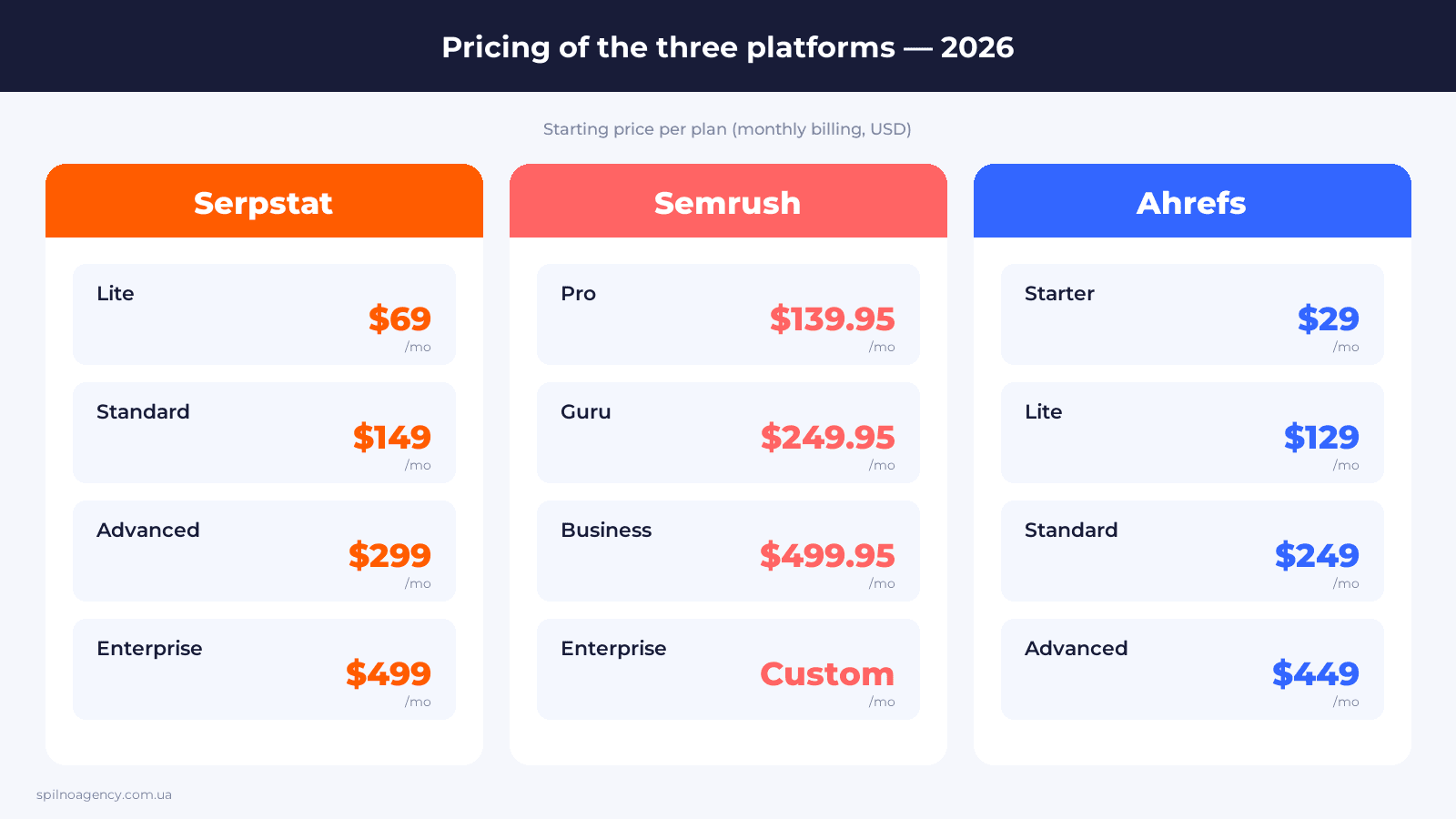
Prices are quoted for monthly billing in USD (no annual discount applied). All three platforms offer roughly 17–20% off for annual prepayment.
Serpstat — 2026 plans
| Plan | Price | Main limits |
|---|---|---|
| Lite | $69/mo | For freelancers and solo specialists |
| Standard | $149/mo | For agencies and in-house teams |
| Advanced | $299/mo | Up to 100 users, expanded limits |
| Enterprise | $499/mo | Global organisations, custom limits |
Semrush — 2026 plans
| Plan | Price | Main limits |
|---|---|---|
| Pro | $139.95/mo | 5 projects · 500 keywords · 100K audit pages |
| Guru | $249.95/mo | 15 projects · 1,500 keywords · 300K pages + Content Tools |
| Business | $499.95/mo | 40 projects · 5,000 keywords · 1M pages + API |
| Enterprise | Custom | Unlimited projects, SLA, custom limits |
Ahrefs — 2026 plans
| Plan | Price | Main limits |
|---|---|---|
| Starter | $29/mo | Entry-level access (new in 2026) |
| Lite | $129/mo | 5 projects, 500 tracked keywords |
| Standard | $249/mo | 20 projects, 2,500 keywords, 6-month history |
| Advanced | $449/mo | 50 projects, 5,000 keywords, history since 2017 |
| Enterprise | from $1,499/mo | Large teams, API, SSO, audit trail |
User reviews and ratings
Ratings collected from G2, Capterra and TrustRadius (May 2026). All three tools sit comfortably in the «4+ stars» zone, but the emphasis in the reviews is different.
| Platform | G2 | Capterra | TrustRadius | What users praise | What users complain about |
|---|---|---|---|---|---|
| Serpstat | 4.6 / 5 | 4.7 / 5 | 8.2 / 10 | Price, UI, clustering, API on all plans | Smaller database, accuracy for non-English markets |
| Semrush | 4.5 / 5 | 4.7 / 5 | 8.5 / 10 | Widest feature set, PPC + Social, market data | High price, user-seat limits, agency add-ons |
| Ahrefs | 4.5 / 5 | 4.7 / 5 | 8.6 / 10 | Backlink quality, speed, clean UX | Credit-based pricing model, no free trial |
The pattern is consistent: enterprise and agency users tilt toward Semrush or Ahrefs, while freelancers and SMB teams more often end up on Serpstat. The r/SEO discussion on Reddit through 2026 tells the same story.
Which tool fits which profile
This is not a verdict but a map — at Spilno Agency we have run all three platforms across client work and each tool has tasks where it is most comfortable.
| Task / profile | Most often picked |
|---|---|
| Small team or freelancer, tight budget, API needed | Serpstat |
| Keyword clustering for large content plans | Serpstat |
| Deep backlink and competitor organic analysis | Ahrefs |
| Global keyword research without per-country queries | Ahrefs |
| Full-stack digital marketing (SEO + PPC + Social + Content) | Semrush |
| Fortune-500 clients, agency stack | Semrush |
| Monitoring the brand in ChatGPT / Google AI | All three — each has it |
Most mature SEO teams in 2026 do not run a single tool — the most common stack is Serpstat + Ahrefs or Semrush + Ahrefs. The first tool covers daily work, the second one covers deep research.
Frequently asked questions
Which tool is the most accurate — Serpstat, Semrush or Ahrefs?
All three keep accuracy at a high level, but traffic and backlink estimates can diverge by 10–30%. Semrush and Ahrefs are usually more accurate for English-speaking markets and large domains, Serpstat is stronger in CIS and EU markets. Best practice is to cross-check key metrics (traffic, links) in two tools at once.
Can Serpstat replace Semrush?
Yes, for most SMB workflows (keyword research, clustering, audit, rank tracking, basic backlink analysis) Serpstat covers the needs at a noticeably lower price. If you rely on Traffic Analytics, Market Explorer, Social Media Toolkit and a full PPC block — Semrush still has the edge.
Is it worth paying for Ahrefs if I already have Semrush?
Often yes. Ahrefs gives deeper backlink analysis and stronger competitor organic data, plus unique metrics (Traffic Potential, Clicks Per Search). Many agencies keep both subscriptions and split tasks between them.
Which tool is cheapest to start with?
Cheapest entry in 2026 is Ahrefs Starter ($29/mo) for absolute beginners and Serpstat Lite ($69/mo) for full daily work. Semrush starts at $139.95/mo — the highest entry threshold.
Do all three tools track AI / GEO?
Yes. Serpstat has AI Mentions Tracker, Semrush has AI Visibility Toolkit (paid add-on $99/mo), Ahrefs has Brand Radar (included in Standard+). The approaches differ but every platform covers brand monitoring inside LLM search.
If you need help choosing the right SEO platform for your profile and budget, Spilno Agency has hands-on experience with all three tools and can recommend the option that will work best for your specific tasks.

Read also

What Is an API: What It Means and How to Work With It in 2026
An API (Application Programming Interface) is a set of rules that lets one program request data or an…

Site Kit by Google: Overview and Setup Guide for WordPress
Site Kit by Google is the official WordPress plugin that brings Search Console, Analytics 4, PageSpeed Insights, Ads,…

Lawyer Lead Cost in 2026: Why Prices Vary So Much
How much does a lead really cost for law firms running Google Ads and Meta Ads in 2026?…