Google Is Changing Its Bidding Systems on August 17, 2026: What Advertisers Should Do

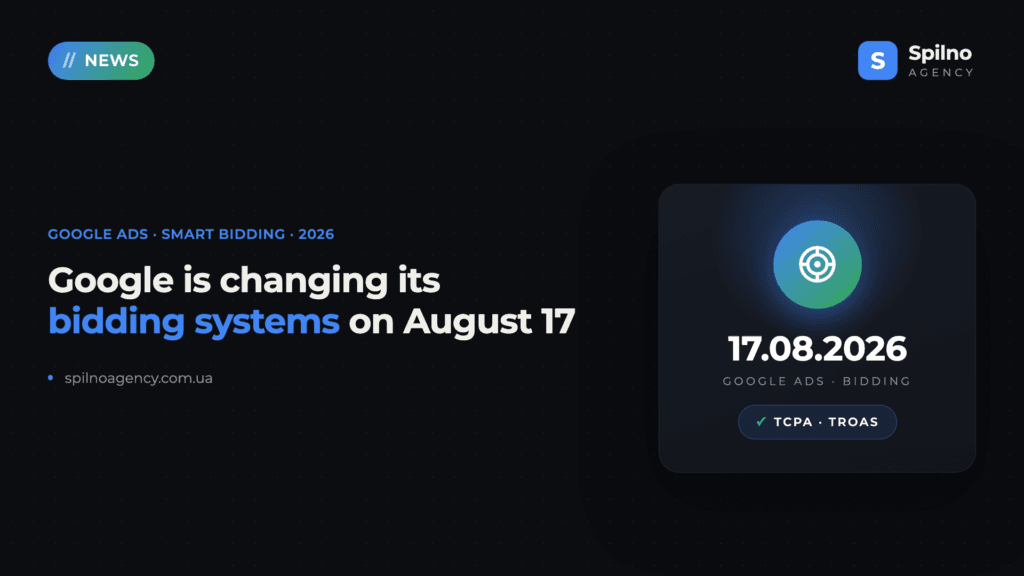
Starting August 17, 2026, Google is changing its bidding systems in Google Ads. Budget-limited campaigns that use target-based bid strategies (Target CPA, Target ROAS) will no longer overperform their targets — the system will consistently optimize toward the exact values you set, including when you adjust budgets. Since July 6, a Bid Target Adjustment Tool has been available in accounts. Here is what exactly changes, which campaigns are affected, and the 5 options Google gives advertisers before the deadline.
What Exactly Google Is Changing in Bidding
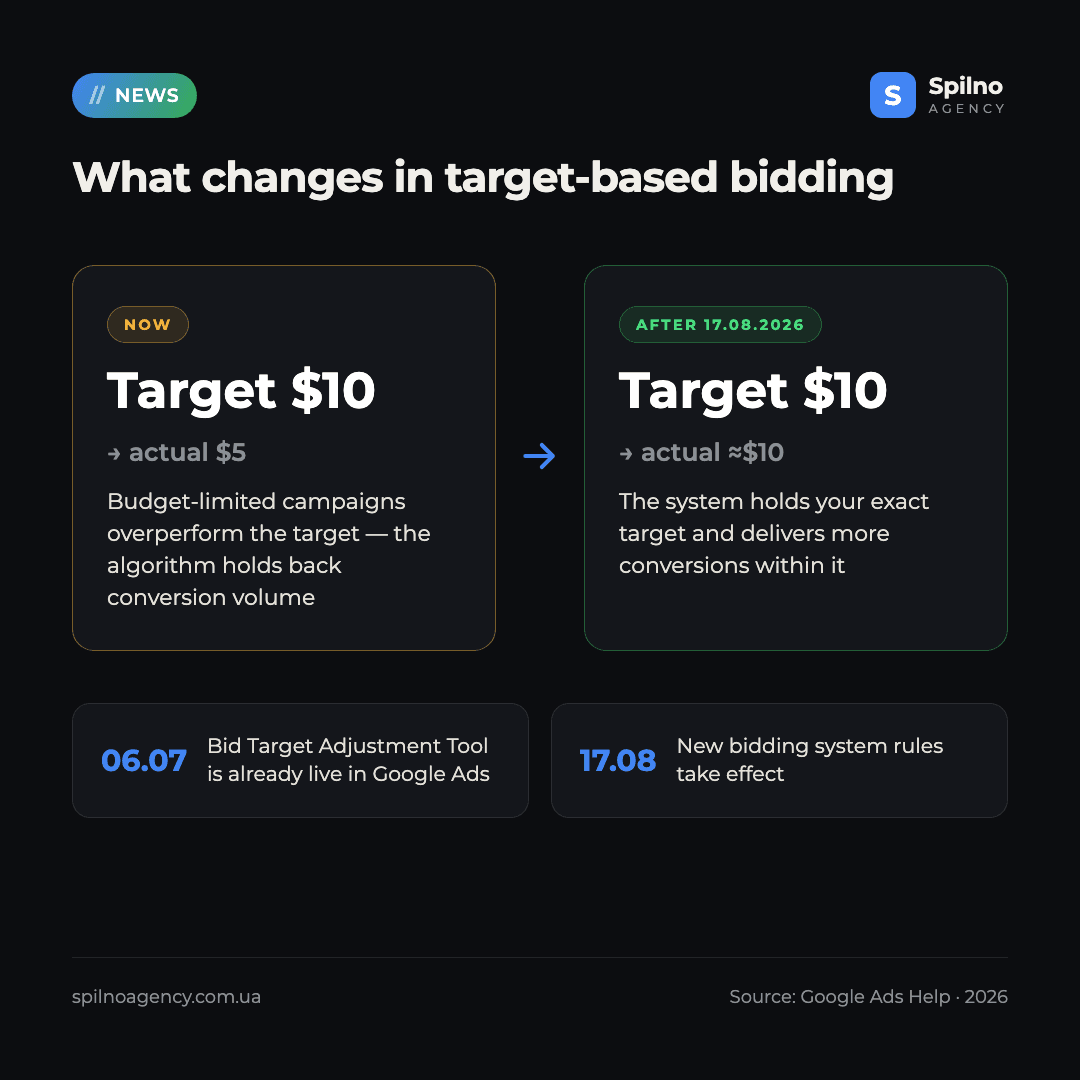
Today, budget-limited campaigns running on target-based bid strategies often overperform their stated targets. For example, you set a Target CPA of $10, but the system actually delivers conversions at $5 — twice as “good” as the goal. It looks like a gift, but in practice it means the algorithm is artificially holding back volume: you could be getting more conversions if the system spent closer to the target you set.
After August 17, 2026, this behavior changes: campaigns will more consistently perform toward your bid target, including when you make budget adjustments. If the target is $10 per conversion, the system will optimize toward $10 rather than $5 — and deliver a larger volume of conversions within that same target. Google’s goal is predictability: bids get anchored to your business goal, and budget becomes a scaling lever instead of a source of “accidental” overperformance.
Key Dates
- July 6, 2026 — the Bid Target Adjustment Tool became available in Google Ads: it shows recommended targets based on your campaigns’ recent performance and lets you apply them in one click.
- August 17, 2026 — the new bidding system rules take effect for all affected campaign types.
Which Campaigns Are Affected
The update covers all core performance formats running on target-based strategies (Target CPA and Target ROAS):
- Search campaigns;
- Shopping campaigns;
- Performance Max;
- Demand Gen;
- Display and Hotel campaigns (already running on the new logic);
- Travel campaigns.
Not affected: App campaigns, Video reach campaigns, and Video view campaigns — they will keep working under the previous logic.
A separate note for multi-channel formats: in Performance Max and Demand Gen campaigns, the update may shift how traffic is distributed across channels (Search, YouTube, Display, Gmail, Discover). If you are still getting familiar with the format, here is our detailed Performance Max beginner’s guide.
What This Means in Practice
The key consequence: if your budget-limited campaigns have been consistently beating their targets, after August 17 your actual CPA will rise and ROAS will fall to the values you set. This is not the algorithm getting worse — it is your results being aligned with the goal you defined yourself. In return, the system promises a larger volume of conversions within that goal.
Google’s own example: a campaign has a Target CPA of $10 but, being budget-limited, has actually been delivering conversions at $5. After the update, the system will optimize closer to $10 — which is exactly why you should check before August 17 that the value in the “target” field reflects your real unit economics, not a number left over from last year.
There is an upside too: after the update you can scale with more confidence. Increasing the daily budget will no longer destabilize performance — the campaign will keep holding your target while simply delivering more conversions.
5 Options Before August 17
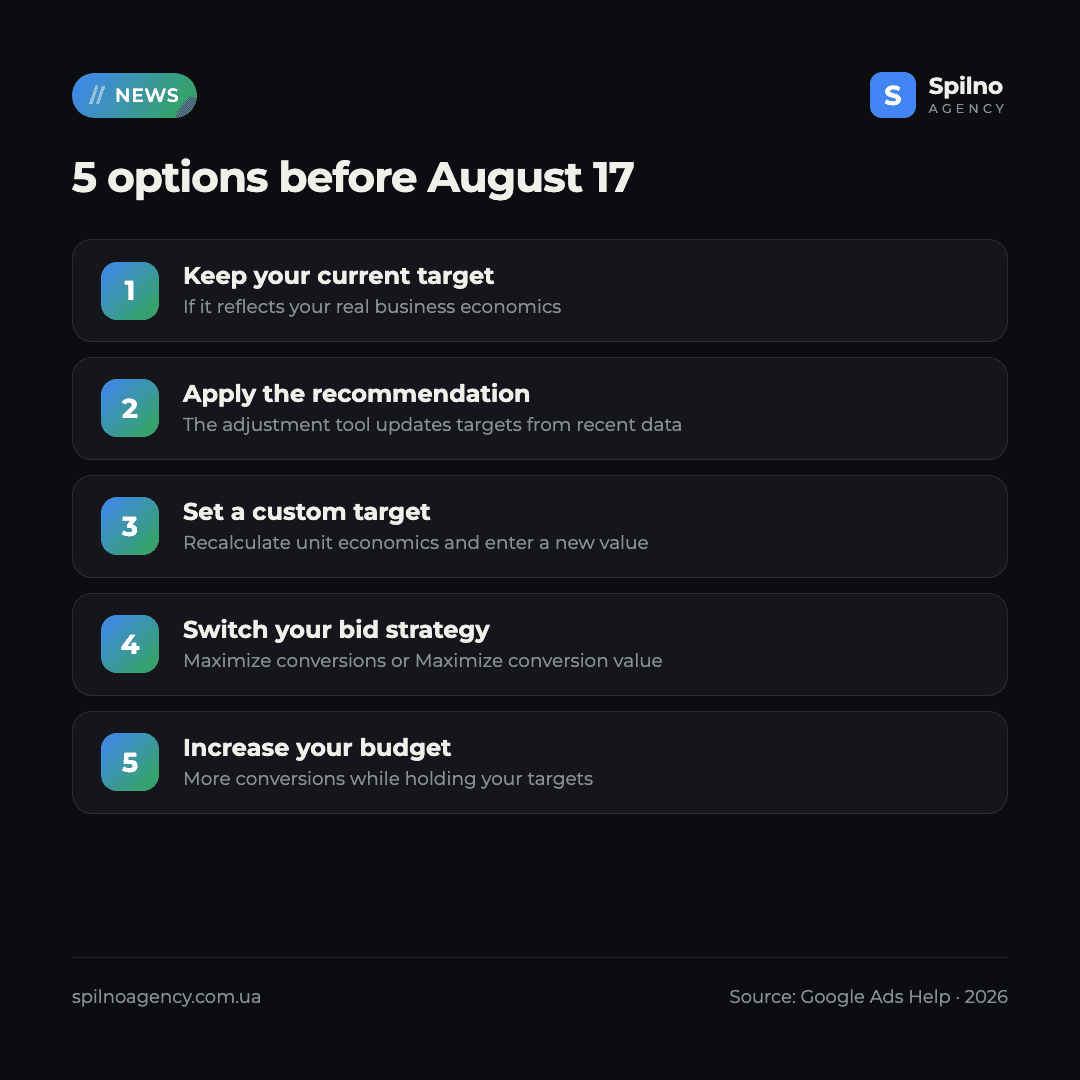
Google recommends reviewing campaigns with target-based strategies before the deadline and choosing one of these scenarios:
- Keep your current target. If your targets reflect your real business economics, no action is needed. But campaigns that used to overperform will adjust toward the stated values.
- Apply the recommended adjustment. Click “Apply” in the Bid Target Adjustment Tool — targets will update based on recent performance.
- Set a custom target. Manually enter a new target that matches your unit economics (maximum acceptable CPA, minimum ROAS).
- Switch your bid strategy. Move to Maximize conversions or Maximize conversion value — if your priority is maximum volume within budget rather than a specific target.
- Increase your budget. After the update, this becomes the main way to get more conversions while holding your targets.
Where the Changes Apply
The update spans Google’s entire ad-buying ecosystem: Google Ads, Search Ads 360, Display & Video 360, Google Ads Editor, and the Google Ads API. In other words, you cannot “sit out” the changes in a different management interface — the logic changes at the level of the bidding systems themselves.
Spilno Agency’s Take
This is the most significant change to Google’s smart bidding logic in years. Our recommendation for European advertisers: don’t wait for August 17. Go through your account now and list every campaign marked “Limited by budget” that runs on a target-based strategy — those are the ones whose metrics will shift most visibly. For each of them, answer honestly: is the target in the settings a real business goal, or a number someone picked long ago? If it’s the latter, use July and August to recalculate your unit economics and lock in correct targets. Not sure where to start? Request a free Google Ads audit — we will review your strategies, targets and account structure before the changes take effect.
Not sure how your campaigns will react to the new bidding rules? The Spilno Agency team will analyze your account, recalculate Target CPA/ROAS around your economics, and prepare your campaigns for the August 17 changes. Leave a request — we will start with a free audit.
Frequently Asked Questions (FAQ)
What changes in Google Ads on August 17, 2026?
Google is updating its bidding systems: budget-limited campaigns on target-based strategies will no longer overperform their targets and will instead consistently optimize toward the CPA or ROAS values you set — even when budgets change.
Which bid strategies are affected?
Target-based strategies — Target CPA and Target ROAS — in Search, Shopping, Display, Travel and Hotel campaigns, as well as Performance Max and Demand Gen.
Are App and Video campaigns affected?
No. App campaigns, Video reach campaigns and Video view campaigns will continue to work under the previous logic.
What is the Bid Target Adjustment Tool?
A tool in Google Ads (available since July 6, 2026) that shows recommended target values based on your campaigns’ recent performance and lets you apply them in one click before August 17.
Do I need to do anything if my campaigns already hit their targets?
If campaigns perform within their targets and those targets match your economics — no action is needed. The changes mostly affect budget-limited campaigns that have been systematically beating their targets.
What if my actual CPA is currently better than the target?
Adjust the target before August 17: apply the tool’s recommendation or set a custom value close to your actual CPA. Otherwise, after the update the system will pull your cost per conversion up toward the old, looser target.
Where do the new rules apply besides Google Ads?
In Search Ads 360, Display & Video 360, Google Ads Editor and the Google Ads API — the changes happen at the level of the bidding systems, not a single interface.

Read also
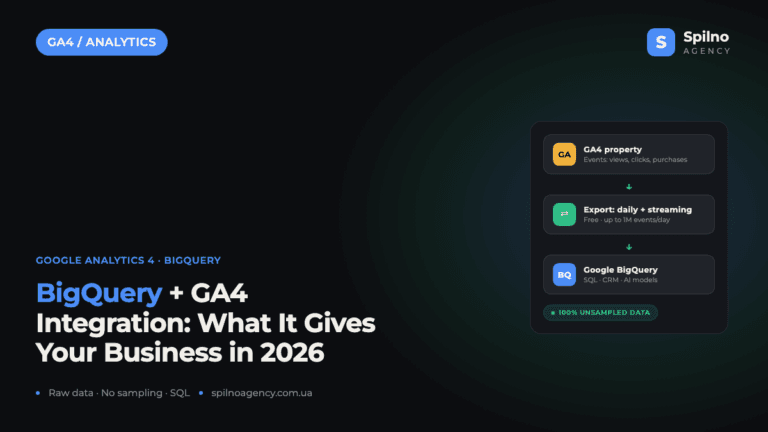
BigQuery + Google Analytics 4 Integration: Why It Matters and What It Gives Your Business in 2026
The BigQuery + Google Analytics 4 integration is a native, free export of raw, event-level data from GA4…
Google Search Console Adds Platform Properties for Instagram, TikTok, X and YouTube
Google has launched a new Search Console property type — platform properties. Owners of Instagram, TikTok, X and…

TikTok Ads Manager Adds Multiple Location Selection for Lead Generation
TikTok for Business has rolled out Multiple Location Selection — a new TikTok Ads Manager feature for Lead…