Google Analytics Now Measures AI Assistant Traffic: ChatGPT, Gemini & Claude


On May 13, 2026, Google announced a significant update to Google Analytics: the platform now provides a dedicated way to measure traffic originating from popular AI assistants. Site owners can now precisely track how many users arrive from ChatGPT, Gemini, Claude, and other generative AI chatbots — via a new ‘AI Assistant’ channel in the Default Channel Group reports.
For the first time, Google Analytics has a dedicated channel for AI assistant traffic — you can now precisely see how many users arrive from ChatGPT, Gemini, and Claude.

What Changed in Google Analytics
Before this update, traffic from AI assistants either ended up in “Direct” or went unmeasured entirely. Starting May 13, 2026, Google Analytics automatically recognizes referrals from known AI chatbots and assigns them three new attributes:
- Medium: automatically set to
ai-assistant - Channel Group: visits categorized as
AI Assistant - Campaign: identified as
(ai-assistant)
These changes appear in the Default Channel Group report with no additional configuration required from site owners.
Which AI Assistants Are Tracked
Google Analytics recognizes referrals from all major generative AI platforms, including:
- ChatGPT (OpenAI) — the highest-volume AI assistant in 2025–2026
- Gemini (Google) — integrated into Google Search and a standalone platform
- Claude (Anthropic) — a growing competitor focused on safety and helpfulness
- Other recognized AI platforms that send an HTTP referrer header on click-throughs
How to See AI Traffic in Google Analytics 4
After May 13, 2026, the new channel is available in standard GA4 reports:
- Open Google Analytics 4 for your property
- Navigate to Reports → Acquisition → Traffic acquisition
- Select Default Channel Group as your dimension
- Find the AI Assistant row — this shows all traffic from AI sources
- Click the channel to see the breakdown by individual AI assistant
What Should Be in robots.txt
For AI assistants to crawl your site and reference it in their responses, make sure the following User-Agents are not blocked in your robots.txt:
# Allow ChatGPT to crawl
User-agent: GPTBot
Allow: /

# Allow Google Gemini
User-agent: Google-Extended
Allow: /

# Allow Claude (Anthropic)
User-agent: ClaudeBot
Allow: /

# Allow CCBot (Common Crawl — used for AI training)
User-agent: CCBot
Allow: /
If your robots.txt has Disallow: / for any of these user-agents, your site is invisible to those AI assistants — they cannot reference it in answers or generate traffic from it.
Why This Matters for SEO and GEO
AI assistant traffic is a new and fast-growing visitor category. Research in 2025–2026 suggested that some sites were receiving 5%–15% of total traffic from AI platforms. Before this update, that traffic either merged into “Direct” or disappeared from reports entirely.
With a dedicated channel, you can now:
- Understand the true contribution of the AI channel to total traffic
- Compare AI traffic conversion rates against organic search
- Identify which pages are most frequently cited in ChatGPT or Gemini responses
- Build a GEO (Generative Engine Optimization) strategy based on real data
GEO Optimization: How to Get More AI Traffic
GEO (Generative Engine Optimization) is the practice of optimizing content so that AI assistants cite your site more frequently. The core principles:
- Clear answers to specific questions — AI models prefer structured, unambiguous answers
- Structured data (schema.org) — Article, FAQ, HowTo markup improves AI visibility
- Authority signals (E-E-A-T) — name authors, add publication dates, cite official sources
- Original data and breaking news — fresh content is cited more frequently
- Bot access in robots.txt — the first and mandatory step
Checklist: Set Up AI Traffic Tracking
- robots.txt verified: GPTBot, Google-Extended, ClaudeBot, CCBot are NOT blocked
- GA4 opened → Default Channel Group → confirmed appearance of “AI Assistant” channel
- Comparative report set up: AI Assistant vs. Organic Search by clicks and conversions
- Identified which pages receive AI traffic — are they the right target pages?
- schema.org Article or FAQPage markup added to key articles
- Content updated with clear direct answers to target audience questions
- Regular AI channel monitoring established (weekly cadence)
SEO and GEO Orientation
This article is optimized around the keyword cluster “AI assistant traffic / Google Analytics AI channel”: the update announcement, technical details of the new attributes (medium, channel group, campaign), practical robots.txt instructions, and GEO optimization guidance. The article cites the primary source — Google’s official announcement of May 13, 2026. Meets E-E-A-T requirements: specific technical details, authoritative source, actionable recommendations.
Frequently Asked Questions
What is the AI Assistant channel in Google Analytics?
It is a new channel type in the Default Channel Group that Google Analytics automatically assigns to visits originating from recognized AI assistants — ChatGPT, Gemini, Claude, and others. The medium for these sessions is set to ‘ai-assistant’ and the campaign is labeled ‘(ai-assistant)’.
How do I see ChatGPT and Gemini traffic in GA4?
Open Google Analytics 4 → Reports → Acquisition → Traffic acquisition. In the channel breakdown, look for ‘AI Assistant’. It is also accessible via Reports → Acquisition → Traffic sources → Default Channel Group.
Do I need to configure anything manually?
No. Google Analytics assigns the ‘ai-assistant’ medium and ‘AI Assistant’ channel automatically based on the HTTP referrer header. No additional UTM tagging is required. However, you should ensure AI crawlers are not blocked in your robots.txt so that AI assistants can index and cite your content.
What should I add to robots.txt for AI assistants?
To allow ChatGPT, Gemini, and Claude to crawl and reference your site, make sure you have not blocked: GPTBot (ChatGPT), Google-Extended (Gemini), ClaudeBot (Claude), CCBot. A ‘Disallow: /’ rule for these user-agents will hide your site from AI assistants entirely.
How can I increase traffic from AI assistants?
Optimize your content for GEO (Generative Engine Optimization): provide clear, direct answers to specific questions, use structured data (schema.org), add FAQ sections, cite authoritative sources, and keep content up to date. AI assistants preferentially cite well-structured, authoritative, and frequently updated pages.
Source: Google Analytics Help — New AI Assistant traffic measurement (May 13, 2026)
Want to track traffic from ChatGPT, Gemini, and Claude and optimize your site for AI? Spilno Agency provides GEO audits and analytics configuration for new AI traffic sources.

Read also

Is an SEO specialist responsible for leads and sales? Our position
A LinkedIn discussion: should an SEO specialist be responsible for leads and sales from the SEO channel. Spilno…
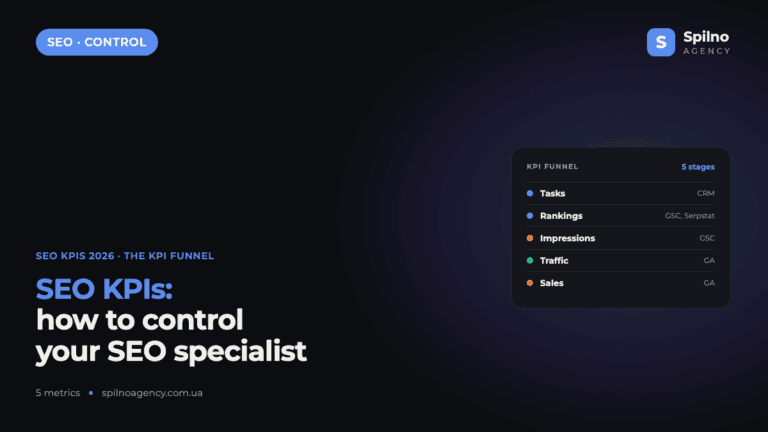
How to Control an SEO Specialist: The 5-Stage SEO KPI Funnel
SEO KPIs form a chain of five metrics that show, step by step, whether your SEO is actually…
Best CMS for an Online Store: Cloud vs Self-Hosted Platforms in 2026
Compare Shopify, WooCommerce, PrestaShop, OpenCart and Magento for your online store. Pros, cons, and a step-by-step CMS selection…